

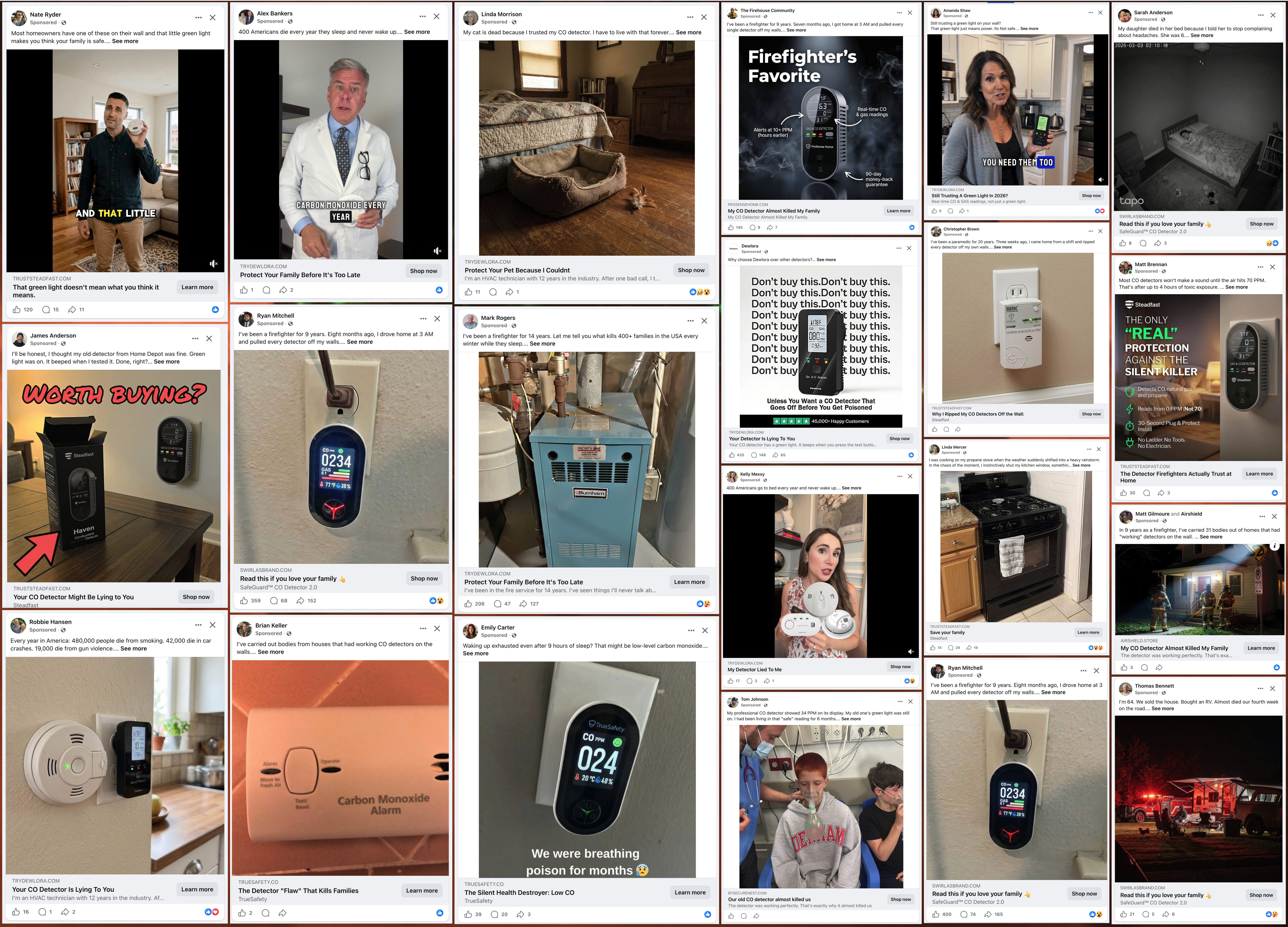
In recent weeks, a plethora of purported firefighters and home inspectors have used Facebook ads to spread sob stories regarding carbon monoxide, accompanied by claims that such tragedies can only be averted by purchasing a specific carbon monoxide detector from a four-month-old website, trydewlora(dot)com. There are, however, multiple problems, such as the fact that many of the pages running the ads are renamed accounts with AI-generated avatars. Additionally, the current Dewlora website is not the only short-lived website selling carbon monoxide detectors to be promoted by this set of accounts; Meta’s ad library indicates the network has promoted at least five other similar sites since the beginning of 2026.
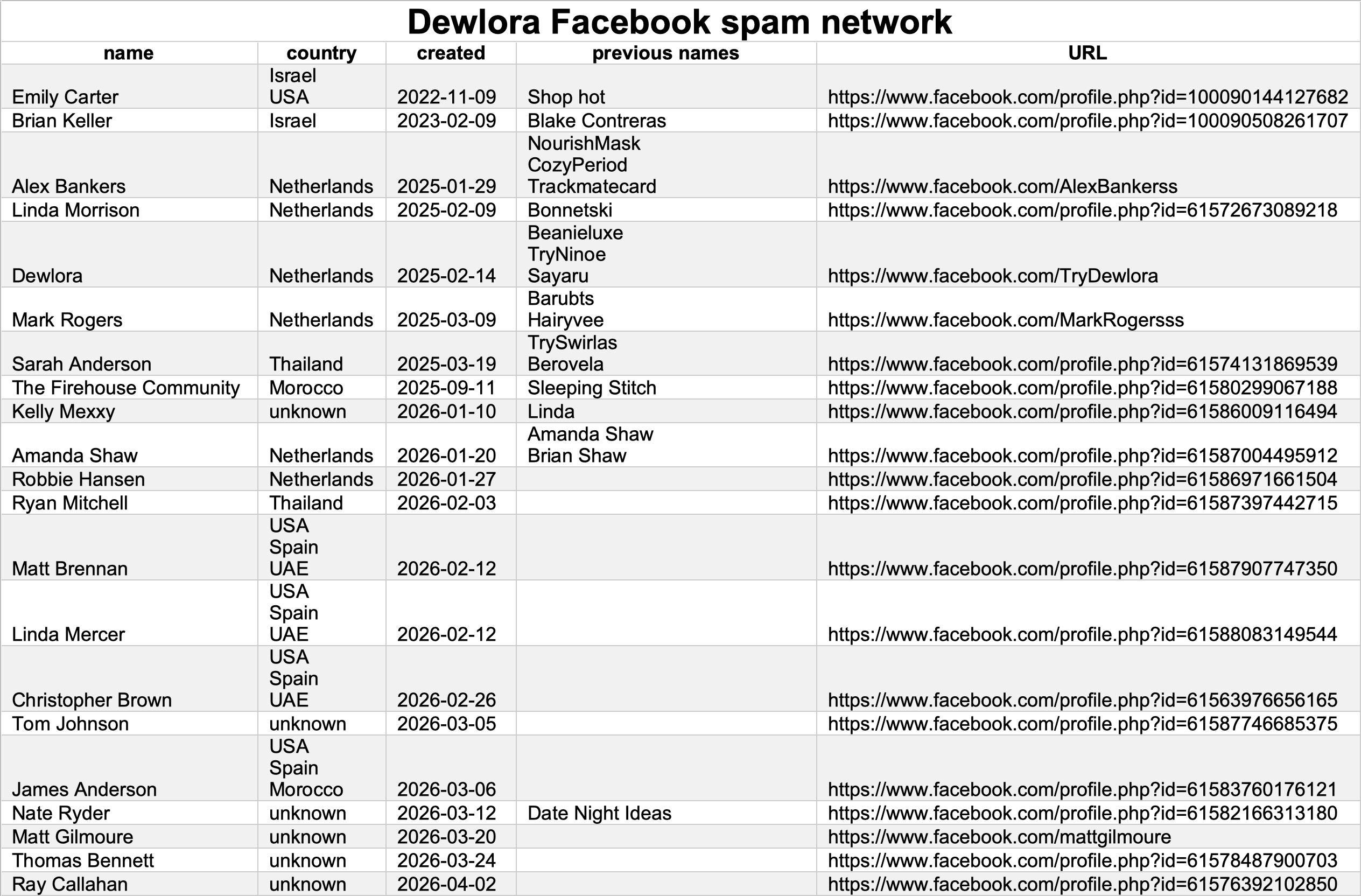
The spam network promoting the Dewlora website consists of at least 21 Facebook accounts, slightly over half of which were created within the last three months. The accounts have a variety of alleged nations of origin, although certain patterns recur: six of the spam accounts are supposedly based in the Netherlands, and three others have operators spread across the same list of countries (the United States, Spain, and the United Arab Emirates). All of the accounts with the exception of the “official” Dewlora account and “The Firehouse Community” have names consisting of a given name and surname, and most claim to be firefighters, electricians, home inspectors, or other professionals whose work might conceivably involve carbon monoxide detectors.
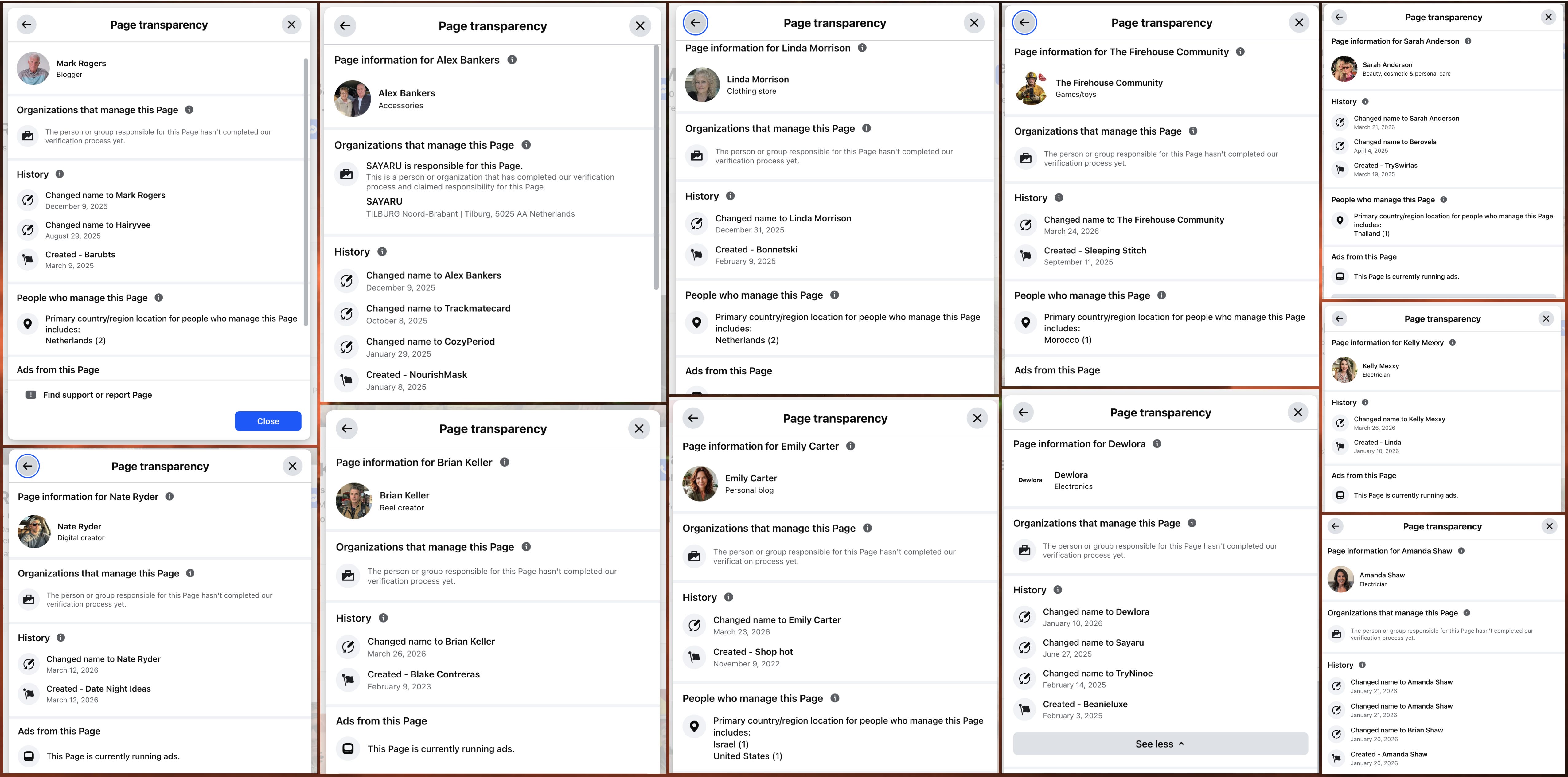
Eleven of the 21 accounts in the spam network have been renamed at least once, and many have undergone multiple name changes. For example, the account presently named Brian Keller was previously Blake Contreras, the account presently named Amanda Shaw was previously Brian Shaw, and the account presently named Kelly Mexxy was previously Linda (no surname). The “official” Dewlora account has also experienced multiple makeovers, having cycled through the names Beanieluxe, TryNinoe, and Sayaru prior to the current incarnation.

The majority of the accounts in the spam network use AI-generated profile images. While these images are more convincingly photorealistic at first glance than AI-generated images from a few years ago, some of them still contain telltale glitches such as mangled text. Additionally, the AI-generated images used by these spam accounts all contain Google’s invisible SynthID watermark, indicating that they were created or modified using Google generative AI tools.
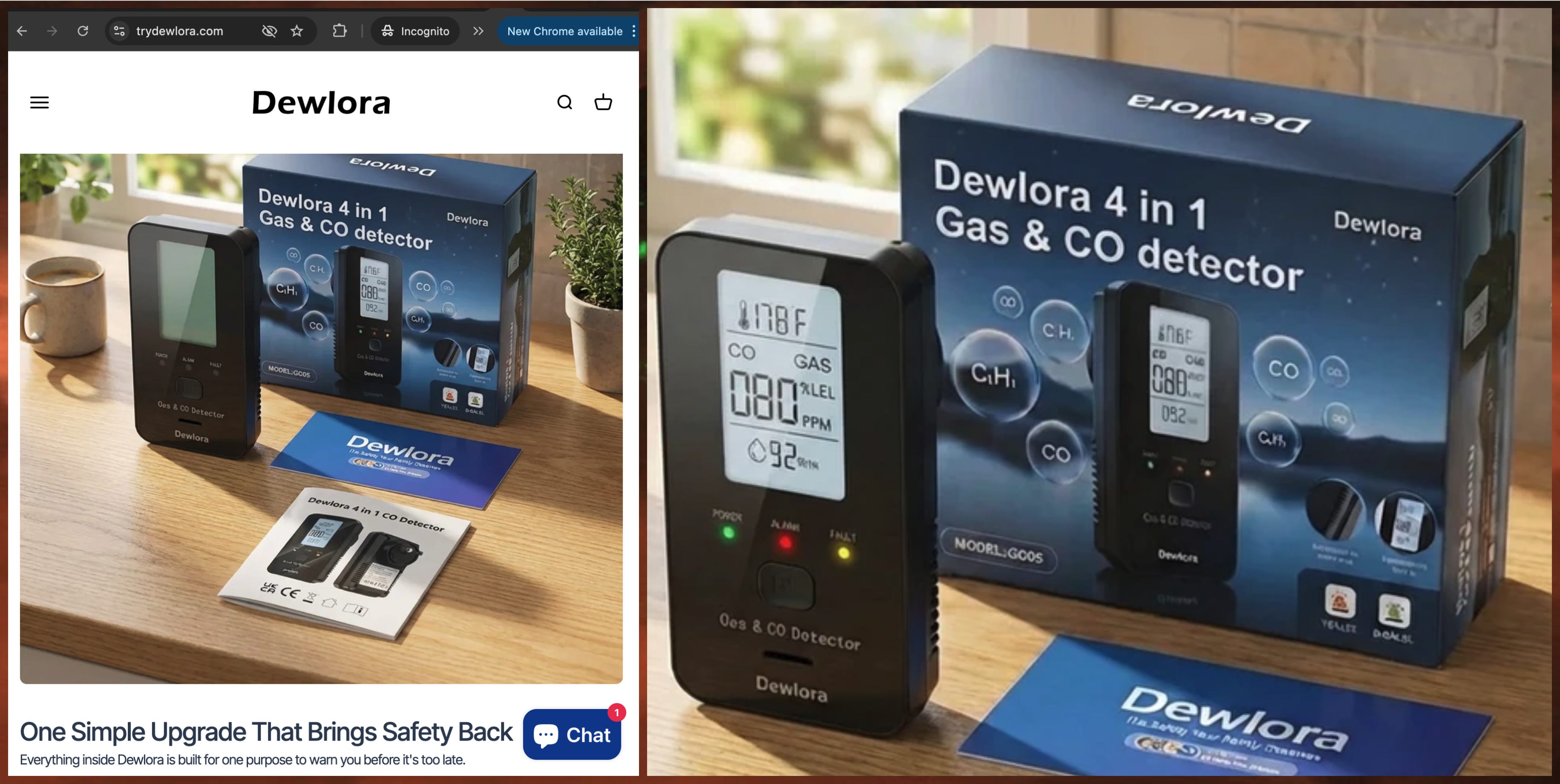
The Dewlora website, trydewlora(dot)com, also makes use of AI-generated images. These include images of the alleged product and associated packaging, with mangled text such as “Qes & CO Detector” rather than “Gas & CO Detector” visible on the detector itself. The chemical formula C₁H₁ on the packaging is also written incorrectly (should be simply CH), and the associated chemical (methylidyne) is additionally highly unstable under normal conditions and would not persist long enough in the air to be detected or pose a threat.
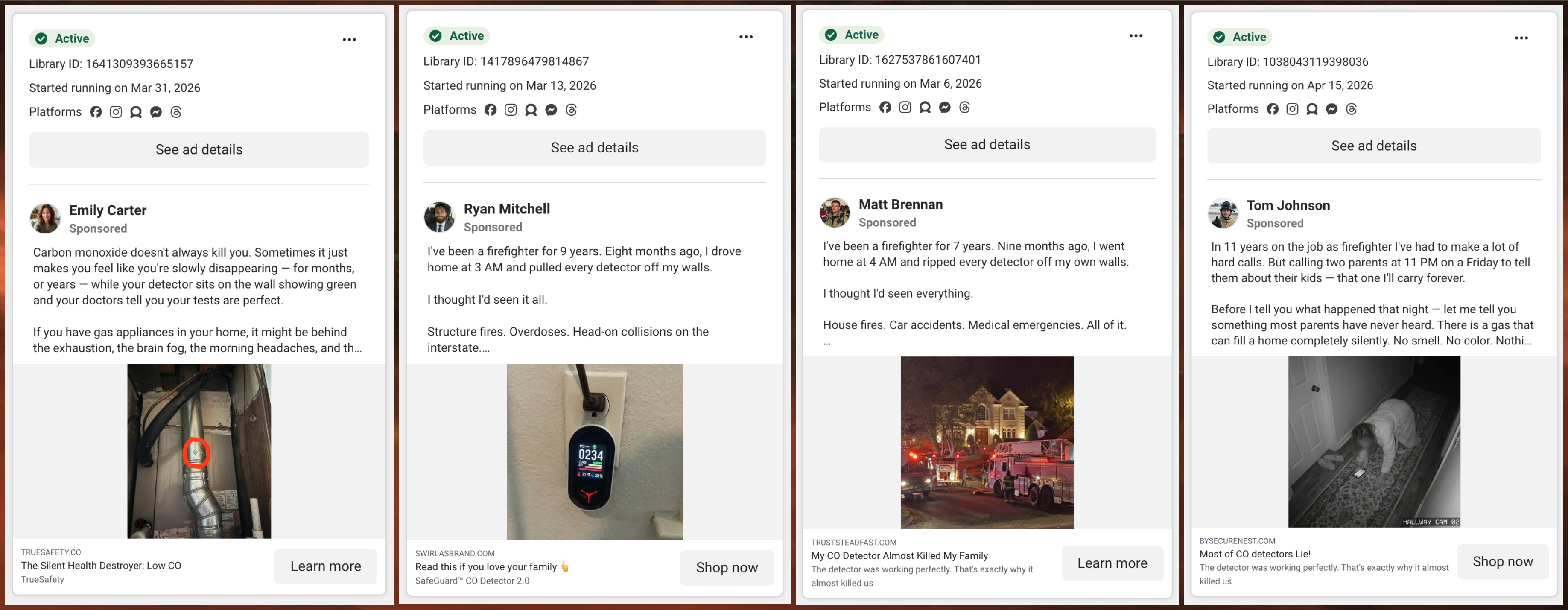
On a final note, the Dewlora website is far from the only fly-by-night carbon monoxide detector website promoted by this spam network. Others include truesafety(dot)com, swirlasbrand(dot)com, truststeadfast(dot)com, bysecurenest(dot)com, and airshield(dot)store. The websites all look relatively similar, and the tragic tales used to advertise them are sometimes duplicated verbatim to advertise different sites.
While spammy activity of this sort is hardly new, the use of generative AI makes it substantially easier to conduct campaigns of this nature. AI-generated avatars are now of sufficient quality to effectively reinforce the illusion that the (likely fictional) sob stories in the ads are coming from a real person with a real life, and the replies to the ads from regular users generally indicate that people are buying the stories. Given the level of duplication involved in the text content and the obvious similarities between the accounts, it would be trivial for Meta to identify this activity as spam and shut it down, and it is thus curious that they have not as of yet done so.