

The 2026 election season in the United States is well underway and in Michigan, the two Democratic candidates, Abdul El-Sayed and Haley Stevens, are competing to face presumptive Republican nominee Mike Rogers. While it is not entirely surprising for a federal election in a swing state to garner a certain degree of outside attention, the degree of interest in the outcome of this particular primary from individuals and groups outside of Michigan has been unusually high. Based on both Bluesky activity and FEC contribution records, a significantly larger share of Stevens’ support appears to have originated from outside of Michigan than El-Sayed’s.
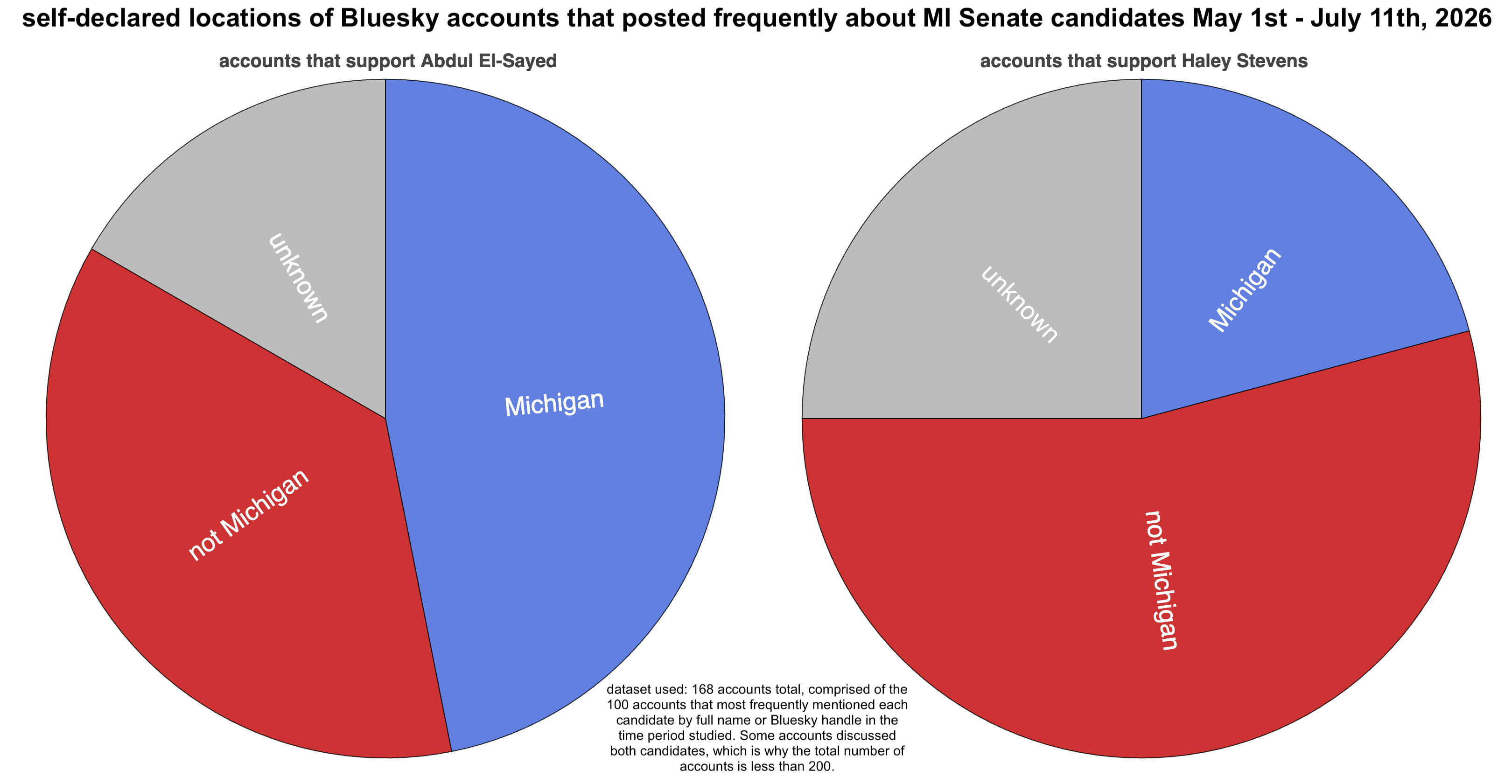
An analysis of recent Bluesky discussion of both Democratic candidates shows that a larger proportion of the accounts frequently posting in support of Abdul El-Sayed appear to be based in Michigan than those posting in support of Haley Stevens. To obtain the dataset for this analysis, all Bluesky posts mentioning Abdul El-Sayed by name or handle between May 1st and July 11th, 2026 were downloaded and filtered to the 100 most prolific posters; this process was repeated to find the 100 accounts that mentioned Haley Stevens most frequently by full name or handle. Since some accounts appeared among the top 100 posters for both candidates, this yielded a total of 168 accounts rather than 200. Posts were then manually analyzed to determine which candidate, if any, the poster supported.
Account location was determined based on content of account biographies and posts. Affirmative claims to live or vote in Michigan or a Michigan city were considered sufficient evidence to assign an account to the “Michigan” category, while specific claims to live or vote in other areas, along with claims that contradict Michigan residence (i.e. “I do not live in a swing state”) resulted in assignment to the “not Michigan” category. Accounts meeting none of these criteria were classified as “unknown”. The “unknown” category mostly consists of accounts belonging to news organizations, although a few more unusual accounts turn up as well, such as elitegrifters.bsky.social, which recently threw a tantrum when former Illinois Congressional candidate Kat Abughazaleh ordered fast food, and bsfavourite.bsky.social, an automated account that spams Bluesky with links to right-wing media.
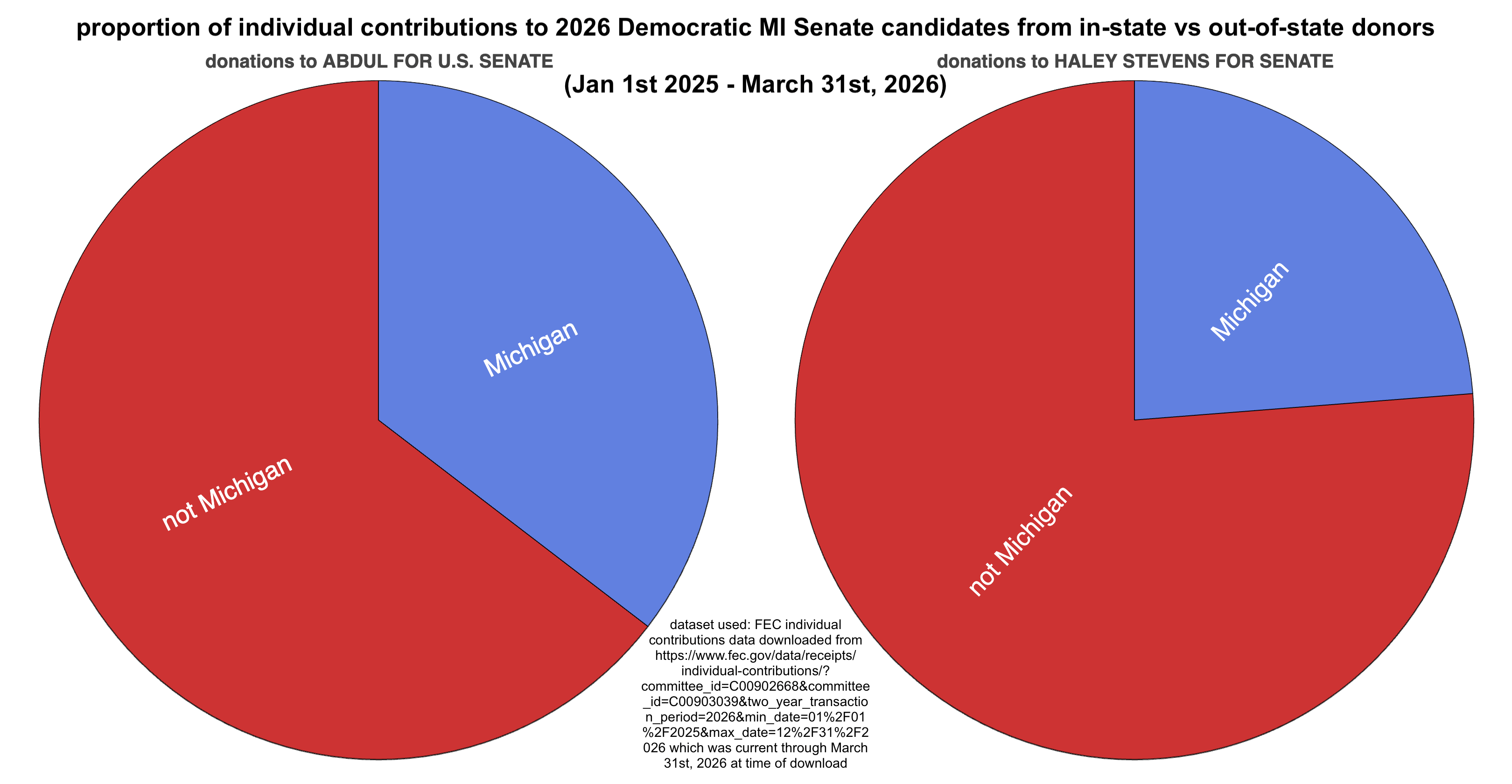
A similar pattern emerges when one studies the individual contributions made to both campaigns. Roughly twice the percentage of the money donated to the Abdul El-Sayed campaign originated from Michigan addresses as that donated to the Haley Stevens campaign. (Campaign contribution data is publicly available from the Federal Election Commission, and is current for both campaigns through March 31st, 2026, as of the time of this writing.)
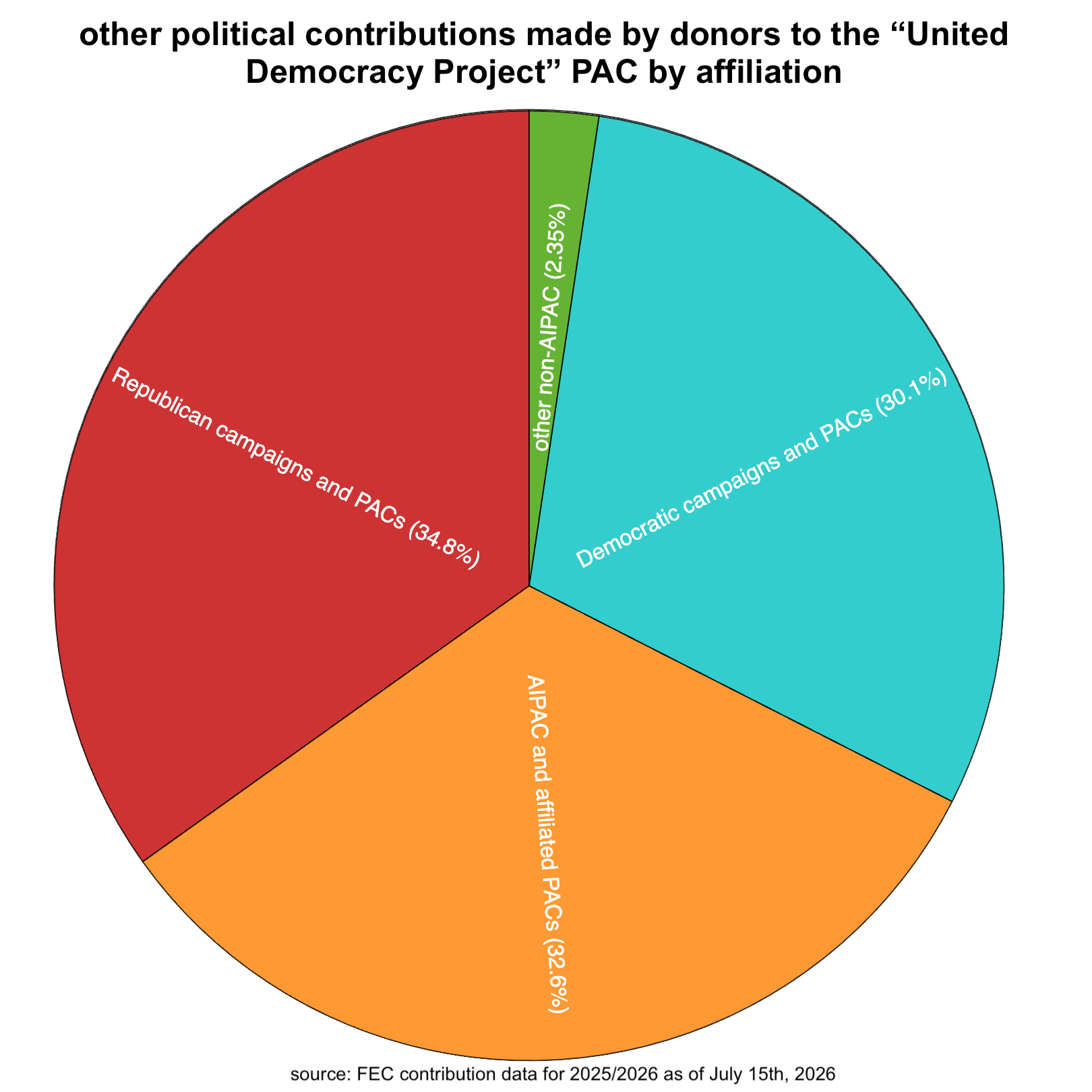
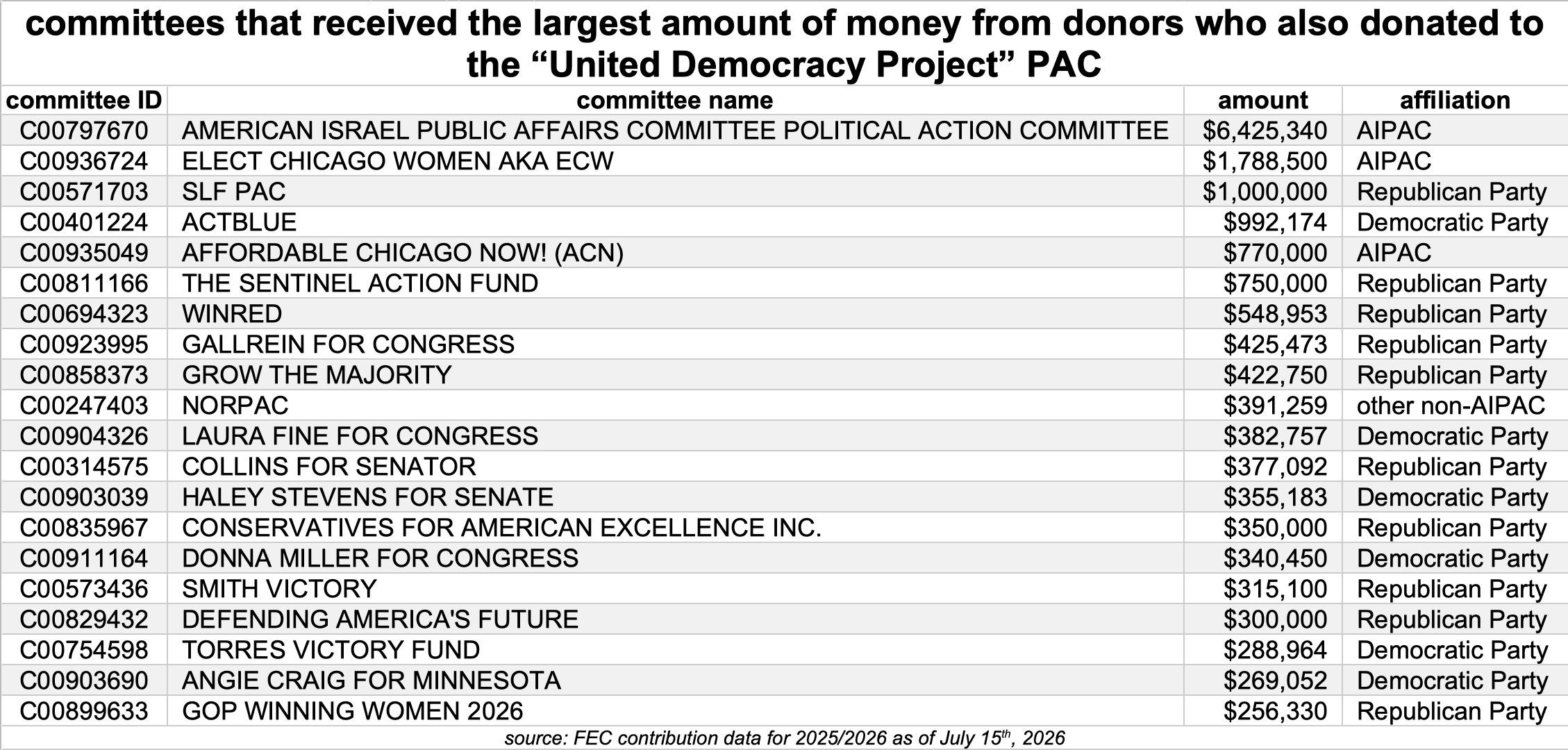
Money from the AIPAC-linked United Democracy Project PAC, which as of July 13th, 2026, had spent $9.3 million in support of Stevens and $5.7 million in opposition to El-Sayed, likewise largely originated with donors outside of Michigan, as only 1.7% of donations to this PAC are from donors with Michigan addresses. Additionally, many of these donors are neither left-leaning nor liberal; analysis of other contributions made by donors to the United Democracy Project PAC reveals that they give money in roughly equal measure to Republicans, Democrats, and AIPAC-linked groups (specifically “United Democracy Project”, “Elect Chicago Women”, “Affordable Chicago Now”, and AIPAC itself), with donations to Republicans making up the largest share by a small margin.
Both Bluesky activity and FEC donation data show a similar pattern: in each context, the Haley Stevens campaign has received more support from outside Michigan than has the Abdul El-Sayed campaign. While it is hardly unusual for a high-profile election to attract attention and donations from people who do not reside in the region in which the election is held, the difference in degree of outside interest between supporters of the two Democratic candidates is notable.